Why Organic Search Looks Like Your Best Channel and Usually Is Not

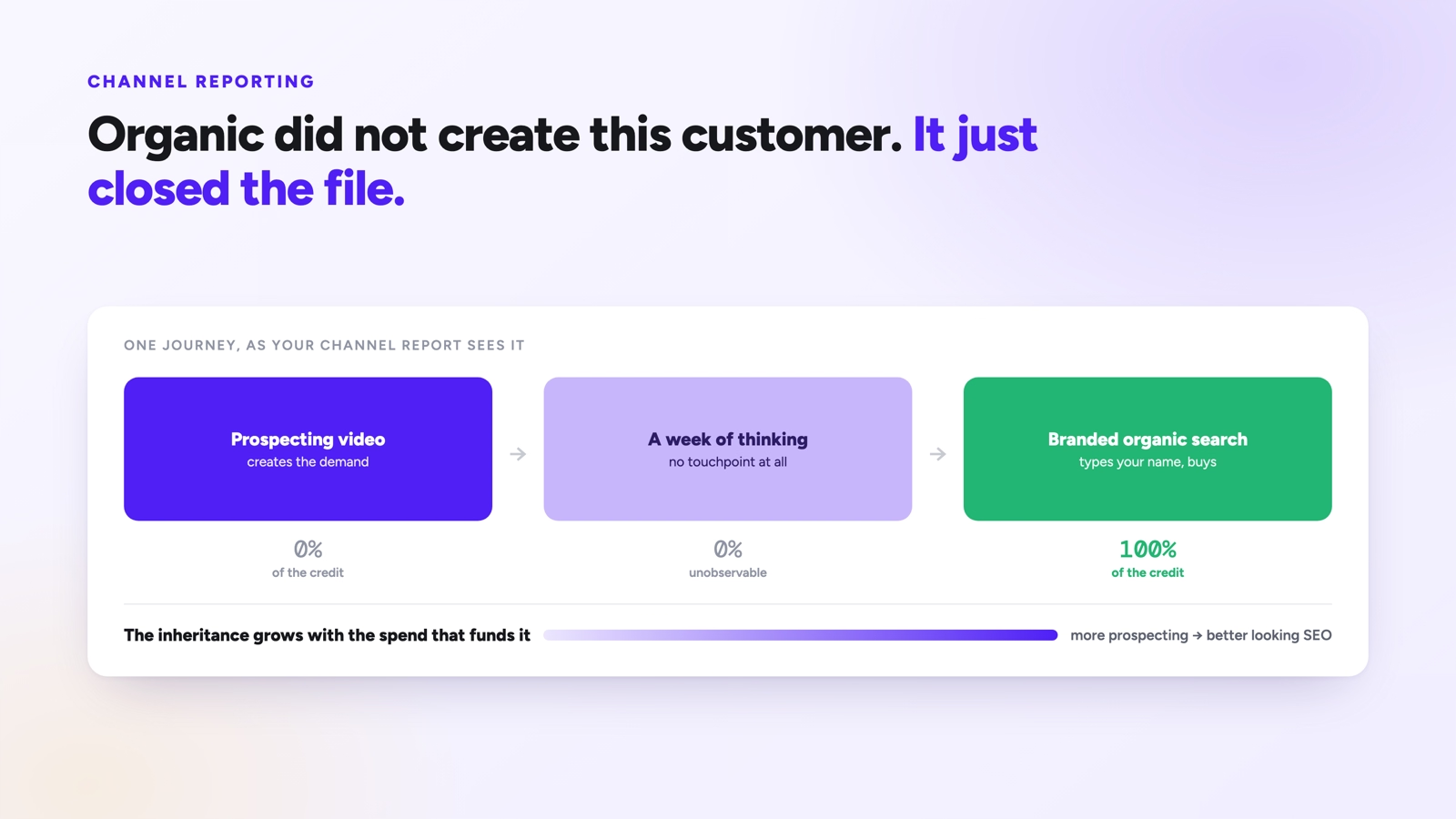
In most ecommerce reporting, organic search sits near the top of the channel table with an efficiency figure no paid channel can match. The interpretation writes itself: SEO is working, organic is the most valuable channel, and the paid budget should probably shrink. The interpretation is usually wrong, and the reason is structural. Organic search, and branded organic search in particular, sits at the end of journeys that started somewhere else. It inherits credit for demand it did not create, and the size of that inheritance grows in direct proportion to how much you spend on the channels that did create it.
What you will learn
In most ecommerce reporting, organic search sits near the top of the channel table with an efficiency figure no paid channel can match. The interpretation writes itself: SEO is working, organic is the most valuable channel, and the paid budget should probably shrink. The interpretation is usually wrong, and the reason is structural. Organic search, and branded organic search in particular, sits at the end of journeys that started somewhere else. It inherits credit for demand it did not create, and the size of that inheritance grows in direct proportion to how much you spend on the channels that did create it.
The Mechanism
Consider how a customer actually reaches a branded organic result. Almost nobody searches for a brand name they have never encountered. The search is downstream of something: an ad, a creator post, a friend's recommendation, a package they saw at a colleague's desk.
The sequence looks like this. A Meta video introduces the brand. Two weeks later the person remembers it, types the brand name into Google, clicks the organic result, and buys. In last click reporting, the entire order belongs to organic search. Even in many multi touch models, the branded search touchpoint receives substantial credit because it is closest to the purchase and carries the strongest observable engagement signal.
The Meta impression that created the memory receives little or nothing, sometimes because it was never observed at all.
Three factors compound this.
Consent loss removes the first touch preferentially. The consent banner appears on the first visit, which is the discovery visit. A visitor who declines on that first session and returns later through branded search produces an order whose observable journey begins at branded search.
Attribution windows truncate long journeys. A seven day window cannot see a touchpoint from three weeks ago. What it can see is the branded search from yesterday.
Organic and branded search are usually merged in reporting. Most default channel groupings do not separate branded from non branded organic. Branded organic, which is largely demand harvesting, gets averaged in with non branded organic, which is genuine discovery, and the combined figure looks excellent.
Separating Branded from Non Branded
This is the single most useful thing you can do to your organic reporting, and most brands have not done it.
Non branded organic search is a genuine acquisition channel. Someone searching "waterproof hiking boots women" does not know you yet, and ranking for that query creates demand. Credit belongs there.
Branded organic search is mostly navigation. Someone searching your brand name has already been acquired by something else, and the organic result is how they got to the door rather than why they came.
| Query type | Function | Attribution interpretation |
|---|---|---|
| Non branded informational | Discovery | Genuine top of funnel contribution |
| Non branded commercial | Consideration | Genuine mid funnel contribution |
| Branded | Navigation | Mostly inherited credit |
| Branded plus product | Navigation with intent | Almost entirely inherited |
Split these in Search Console, map them into separate channels in your analytics, and report them separately. The moment branded and non branded organic appear as two rows, the conversation changes, because branded organic's efficiency figure stops being read as evidence that SEO is driving growth.
Sizing the Inflation in Your Own Data
Four tests, in increasing order of rigour and cost.
Correlation with paid spend. Plot branded search volume against paid media spend over twelve months. If branded volume tracks paid spend with a lag, then paid is creating the demand that branded search is harvesting. A tight correlation is strong evidence, and it is free to check.
Post purchase survey comparison. Ask customers how they first heard about you. Compare the distribution of survey answers against the distribution of attributed credit. In most brands, paid social and creators appear far more often in survey answers than in attribution, and organic search appears far less. The gap between the two distributions is an estimate of the misattribution.
First touch versus last touch comparison. Run the same period under both models. Channels that gain heavily under last touch and lose heavily under first touch are the harvesting channels. Branded search and retargeting are almost always at the top of that list.
Holdout testing. Pause or substantially reduce branded search advertising in one market and observe total orders rather than branded search orders. This is the closest thing to proof available, since it measures what actually disappears rather than what attribution claims. The usual finding is that a large share of the traffic arrives anyway through the organic result immediately below the ad.
The holdout is worth the effort when branded search represents a meaningful share of spend. Many brands discover that a substantial portion of their branded search budget is buying clicks they would have received for free, which is the single most common avoidable waste in ecommerce paid search.
What to Do With the Finding
Recognising the inflation does not mean cutting organic investment. It means changing what you attribute to it and what you expect from it.
Report branded and non branded separately, permanently. This is the structural fix and everything else follows from it.
Judge SEO on non branded performance. Non branded organic sessions, non branded organic revenue, and rankings on commercial non branded terms are the metrics that reflect whether SEO is creating demand.
Treat branded organic as a brand health metric. Growth in branded search volume is one of the better available indicators that upper funnel activity is working. Read it as an output of brand building rather than as an achievement of the SEO channel.
Re examine upper funnel budget. If branded search and organic are absorbing credit from paid social and video, then those channels are more valuable than the report shows, and cutting them will show up as declining branded search volume one to two quarters later.
Test branded search spend. Run the holdout. The result is frequently a direct budget saving.
The decision factors:
- Is branded separated in your reporting? If not, nothing else in this list is measurable.
- Does branded volume track paid spend? The correlation is the cheapest available diagnostic.
- What is your consent rate? Low consent amplifies the effect by removing first touches preferentially.
- How long is your purchase cycle? Longer cycles mean more journeys where the discovery touch falls outside the attribution window.
- Are you willing to run a holdout? It is the only method that produces evidence rather than inference.
The consent rate factor is worth expanding because it links two problems that are usually treated separately. If a third of your visitors decline tracking, then a third of your discovery touchpoints are invisible, and the orders those visitors eventually place get assigned to whatever was observable, which is disproportionately branded search and direct. Raising the consent rate does not just improve data completeness in the abstract. It specifically reduces the over crediting of harvesting channels, because it restores the upper funnel evidence that was being lost.
The cycle length factor works the same way. A brand with a four month consideration period and a thirty day attribution window is structurally unable to observe the first touch on most of its orders. Extending the lookback window is the direct fix, and it usually shifts credit away from organic and branded search toward paid discovery channels.
Summary
Organic search looks like your best channel because branded organic sits at the end of journeys that began elsewhere, and it inherits credit for demand created by paid media, creators, and word of mouth. Consent loss, short attribution windows, and the standard practice of merging branded with non branded organic all amplify the effect.
Split branded from non branded organic in your reporting as the first move, since every other diagnosis depends on it. Then check whether branded volume tracks paid spend, compare your attribution distribution against post purchase survey answers, and run a holdout on branded search where the budget justifies it. The likely conclusion is that your upper funnel channels are worth more than the report shows and that some portion of your branded search spend is buying traffic you already had.
FAQ
Does this mean SEO is not worth investing in?
No. Non branded organic search is a genuine acquisition channel and often an efficient one. The point is that the headline organic figure conflates it with branded navigation traffic, which makes the channel look better than the acquisition work it is actually doing.
How do I split branded from non branded organic?
Use Search Console query data to classify queries containing your brand name and common misspellings, then map that split into your analytics channel grouping. Most analytics platforms allow a custom channel group rule based on query or landing page patterns.
Is branded search advertising a waste of money?
Sometimes, and it is testable rather than a matter of opinion. Pause it in one market and measure total orders rather than branded search orders. Brands frequently find that most of that traffic arrives through the organic result anyway, though defending against competitor bidding on your brand terms can justify some spend.
Why does my post purchase survey disagree with my attribution so much?
Because they measure different things. Attribution reports the last observable touchpoints, surveys report what the customer remembers as the source of discovery. The gap is concentrated exactly where you would expect: paid social and creators appear more in surveys, branded search and direct appear more in attribution.
What attribution window would reduce this problem?
One matched to your actual purchase cycle rather than a platform default. If your median time from first touch to purchase is six weeks, a thirty day window structurally cannot see the beginning of most journeys, and the credit it cannot assign upstream flows downstream to branded search and direct.
Decisions start with trust
14-days for free