The First Session Problem: Why Consent Gated Tracking Loses the Touchpoint That Mattered

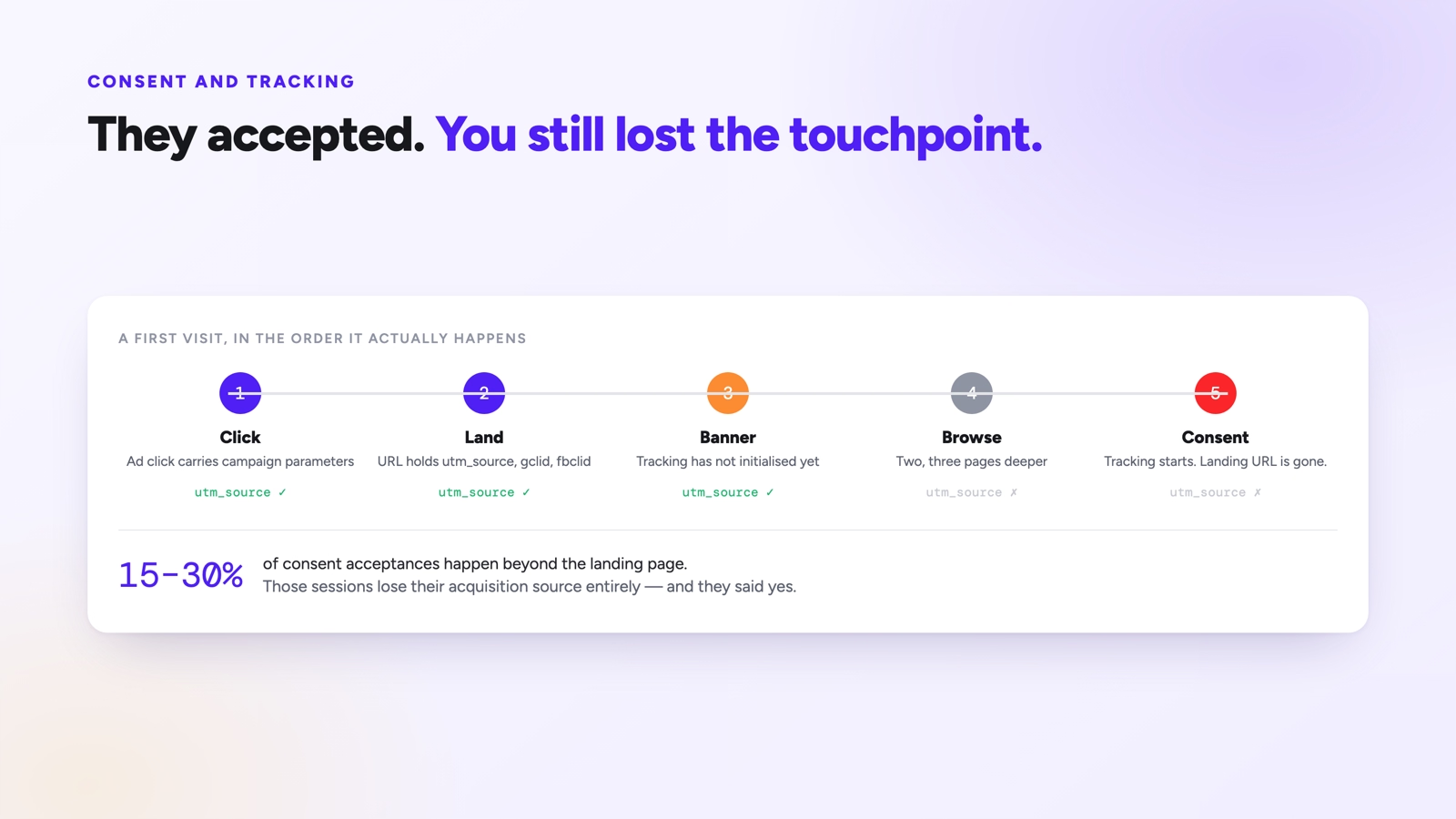
There is a specific and fixable bug in most consent gated tracking implementations. A visitor clicks an ad, lands on your site with campaign parameters in the URL, sees a consent banner, browses for a while, and accepts consent three pages later. By the time tracking initialises, the landing URL is gone, the referrer is gone, and the session that eventually converts is recorded as arriving from nowhere. The touchpoint that brought them to the site is lost, not because they refused consent, but because the sequence of events threw it away before anyone said yes.
What you will learn
There is a specific and fixable bug in most consent gated tracking implementations. A visitor clicks an ad, lands on your site with campaign parameters in the URL, sees a consent banner, browses for a while, and accepts consent three pages later. By the time tracking initialises, the landing URL is gone, the referrer is gone, and the session that eventually converts is recorded as arriving from nowhere. The touchpoint that brought them to the site is lost, not because they refused consent, but because the sequence of events threw it away before anyone said yes.
This is not a consent rate problem. It affects visitors who do consent. It is an implementation problem, and it is worth understanding precisely because the fix is straightforward once you can see it.
The Sequence That Loses Data
Walk through what actually happens on a first visit.
- The visitor clicks an ad and lands on
shop.example.com/product?utm_source=meta&utm_campaign=spring_video&fbclid=... - The page begins rendering. The consent management platform loads and blocks all non essential scripts, which is correct behaviour.
- The consent banner appears. Analytics and marketing tags are not running.
- The visitor ignores the banner and browses. They view a category page, then two products. The URL is now
shop.example.com/product/boots-black, with no campaign parameters. - On the fourth page, the visitor accepts consent.
- Tracking scripts initialise for the first time and record a page view.
What tracking sees is a session beginning on a product detail page with an internal referrer or no referrer at all. The utm_source=meta that identified where this person came from was present only in step one, and nothing was retained.
The visitor consented. The data was still lost. This is the first session problem.
Why It Is Worse Than It Sounds
Two properties make this more damaging than a random data gap.
It affects first sessions specifically, and first sessions are discovery moments. The touchpoint being destroyed is disproportionately the one that introduced the customer to the brand, which means the loss concentrates on upper funnel channels.
It also affects exactly the visitors who take their time. A visitor who accepts the banner immediately loses nothing. A visitor who browses first, considers, and accepts later loses everything about their arrival. Considered purchases produce considered browsing behaviour, so the loss correlates with the customers who are worth the most.
The combined effect in reporting is a chunk of traffic that appears as direct or organic, arriving on deep pages, with no campaign association, converting at a decent rate, and receiving credit that belongs to paid acquisition.
The Consent Callback Fix
The solution is to capture the landing context before consent is decided, hold it without processing it, and then use it when and only when consent is granted.
Capture at page load, in memory. When the page loads, read the campaign parameters, the click identifiers, the referrer, and the landing path. Hold them in a variable in page memory or in session storage. Do not write a persistent identifier, do not send anything to a server, and do not set a tracking cookie. Nothing has been processed for marketing purposes at this point.
Preserve across the pre consent navigation. If the visitor navigates before deciding, the in memory values must survive. Session storage handles this, and the values being stored are the visitor's own landing parameters, not a persistent identifier assigned to them.
Attach a consent callback. Every consent management platform exposes an event that fires when the visitor grants consent. Subscribe to it. When it fires, initialise tracking and pass the preserved landing context into the first event, so the session is recorded with the campaign parameters it actually arrived with rather than with whatever page happened to be open.
Backfill the session start. The first tracked event should reconstruct the session properly: original landing page, original referrer, original campaign parameters, and a note that consent was granted at a later point in the session.
The result is that a visitor who accepts consent on page four is recorded as having arrived from the Meta spring video campaign, on the product page they actually landed on, which is the truth.
What This Does Not Do
It is worth being precise about the boundary, because this pattern is sometimes described in ways that overstate it.
It does not track anyone before consent. No identifier is assigned, nothing is transmitted, and nothing is stored persistently prior to the consent decision. The landing parameters are values the visitor's own browser already holds, retained temporarily in their own session and discarded if consent is refused.
It does not recover journeys from visitors who decline. Those remain unobserved, which is the correct outcome.
It does not replace consent rate optimisation. It recovers data from people who already said yes, which typically represents a meaningful share of first sessions but not the whole gap.
Discuss the implementation with your data protection contact before shipping. The distinction between temporarily retaining a visitor's own landing parameters and processing personal data for marketing purposes is a real one, and having the reasoning documented is worth the hour it takes.
Detecting Whether You Have This Problem
Several signals point to it, and all of them are checkable in your existing analytics.
| Signal | What to look for |
|---|---|
| Direct traffic landing on deep pages | Direct sessions starting on product or category URLs rather than the homepage |
| Session start page distribution | A high share of sessions beginning on pages that receive no external links |
| Consent timing data | Median time or page depth between page load and consent acceptance |
| Paid traffic gap | Ad platform clicks substantially exceeding sessions tagged with those campaign parameters |
| First session conversion oddity | A cohort of high converting sessions with no acquisition source |
The paid traffic gap is the most direct test. Take reported clicks from one campaign over a week and compare against sessions carrying that campaign's parameters. Some gap is normal, from bounces before page load and from parameter stripping in redirects. A gap above roughly 20 percent, particularly if it correlates with the share of visitors who accept consent after the first page, points to this issue.
The consent timing measurement is the confirming test. If most acceptances happen on the landing page, the exposure is small. If a substantial minority happen two or more pages in, that minority is exactly the population losing its acquisition source.
The Decision Factors
- Does your consent platform expose a callback event? All the major ones do, though the API name varies.
- Is tracking initialised on the callback, or only on the next page load? Waiting for the next page load loses the current session context.
- Are landing parameters preserved across pre consent navigation? In memory alone is not enough if the visitor navigates.
- Is the reconstruction reflected in the session start, not just the current page? Attaching parameters to a mid session event does not repair the attribution.
- Has the approach been reviewed by legal? Worth doing once, in writing.
The second point causes the most silent failures. Many implementations initialise tracking correctly but do so on the next page view rather than immediately when consent is granted. That means the session start is recorded as the page where consent happened, with the correct campaign parameters attached only if the visitor happens to still be on the landing page. The callback needs to fire tracking immediately, with the reconstructed context, not wait for the next navigation.
Summary
Consent gated tracking loses first session acquisition data even from visitors who consent, because the campaign parameters that identify the visit are present only on the landing URL and are gone by the time the consent decision arrives. The loss concentrates on discovery touchpoints and on the more considered visitors who browse before deciding, which makes it doubly expensive.
The fix is a consent callback pattern: capture the landing context at page load without processing it, preserve it across pre consent navigation in the visitor's own session, initialise tracking the moment consent is granted, and reconstruct the session start with the original parameters. Check whether you have the problem by comparing ad platform clicks against sessions carrying those campaign parameters, and by looking at how many of your direct sessions begin on pages nobody links to.
FAQ
Is preserving landing parameters before consent legal?
Retaining a visitor's own landing parameters temporarily in their session, without assigning an identifier, transmitting data, or storing anything persistently, is generally treated differently from processing personal data for marketing. It is a question worth putting to your data protection contact in writing before implementation, since the details of your setup matter.
How much data does this actually recover?
It depends on how many of your consenting visitors accept after the first page. Brands that measure this often find 15 to 30 percent of consent acceptances happen beyond the landing page, and those sessions currently lose their acquisition source entirely.
Does server side tracking solve this on its own?
No. Server side collection solves ad blocker and script failure losses, but the first session problem is about sequence, not architecture. If the server side event fires only after consent and carries the current page rather than the landing page, the same data is lost.
What if the visitor never accepts consent?
The preserved parameters are discarded and nothing is recorded, which is the correct outcome. This pattern recovers data from visitors who do consent, it does not create a route around refusal.
How do I know if my implementation already handles this?
Land on your own site with test campaign parameters, browse three pages without touching the banner, then accept. Check whether your analytics records the session as starting on the original landing page with the campaign parameters attached, or on the third page with no source.
Decisions start with trust
14-days for free